
Alchemy Without the Alchemist
On what is being harvested when we look into screens


There is an image I cannot stop returning to.
Across the world, at every hour, human beings are sitting in rooms looking into rectangles of light. On trains, in bed, at kitchen tables where food cools unnoticed. Children under the blue wash of screens. Adults toggling between tabs. Elderly hands learning the choreography of glass.
All of them looking. All of them, in some small but continuous way, giving something away.
And elsewhere, far from these rooms, buildings without windows are getting very hot.
This is not metaphor. The infrastructure that holds digital life in place runs on electricity at a planetary scale. Servers process each search, each scroll, each flicker of attention. Energy moves through them and becomes heat. That heat must be cooled, redirected, expelled.
The entire system resolves, finally, as temperature.
It is difficult to hold these two images at once: a person alone with a screen, and a distant building warming in response.
But they are the same event.
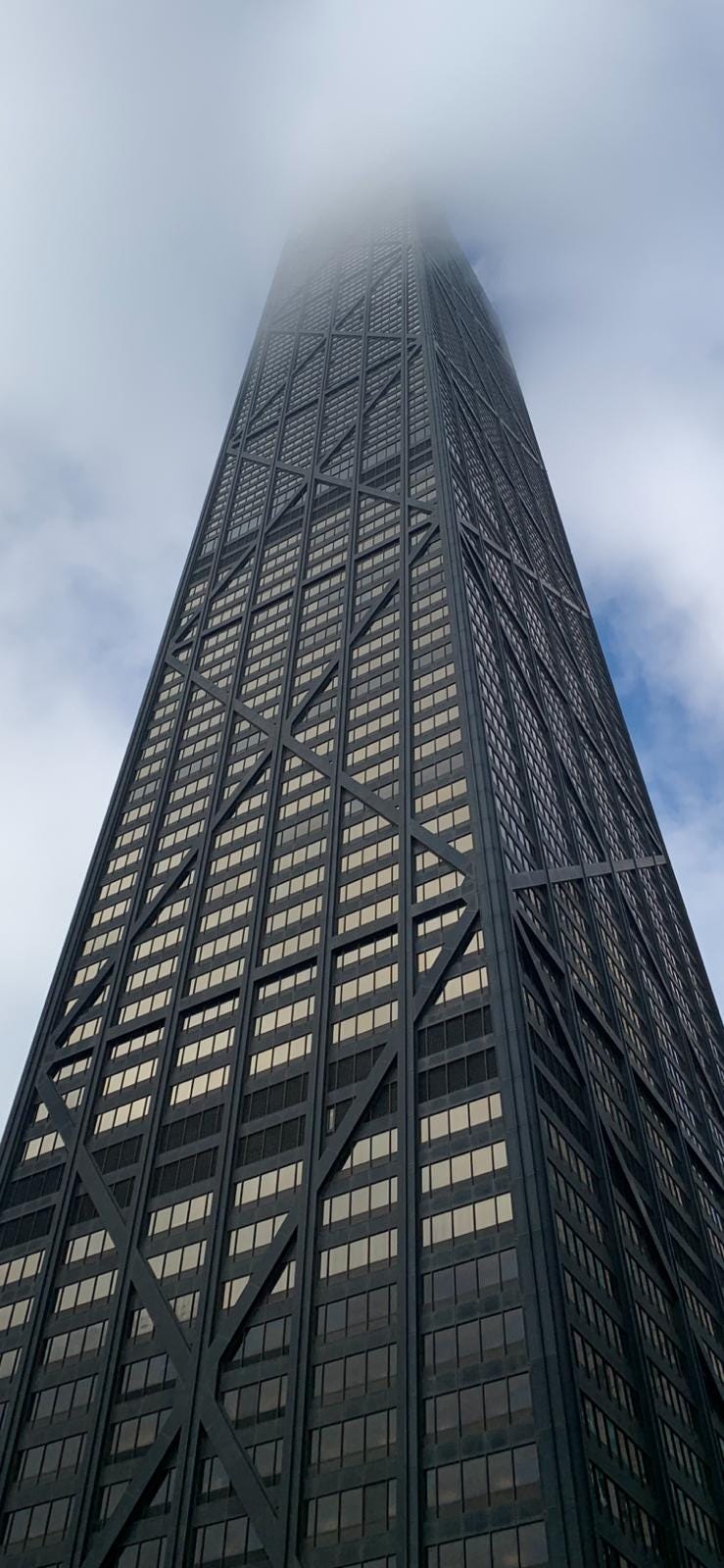
The language we use for this system obscures what it is doing.
We call it content. Connection. Information.
But what is being moved is not neutral. What is being extracted is time—not abstract time, but lived time. The finite span of a human life, divided into moments of attention. The direction of a mind. The subtle current of awareness that animates a body and gives shape to experience.
The human being is not the customer. The human being is the substrate.
Attention is not just a cognitive act. It is a movement of energy. In older frameworks, this was not controversial.
In Vedic traditions, attention follows prana—life force. Where attention goes, vitality goes. The eyes are not passive. They are directional. To look is to extend something of yourself into the world. Sustained gaze through a screen—hours, daily, across years—is an open drain. The flow moves outward. Nothing returns through it.
In Western esoteric language, Rudolf Steiner described this same movement through the etheric body—the layer of life that holds rhythm, growth, repair. It is nourished by contact with what is alive: plants, water, light shifting across a day. Screen attention hyperstimulates the nerve-sense pole—the eye, the processor, the head—while the metabolic pole, the will, the hands, the body’s own intelligence, quietly atrophies.
What happens when that movement is continuously redirected into environments that do not return anything?
The body does not register this as absence. It registers it as stimulation. Brightness. Motion. Novelty. But underneath that, something else is happening: the slow uncoupling of attention from nourishment.
A lamp that remains lit while the oil is not replenished.

There is a tendency to look for a center to this system—a group of people directing it, benefiting from it, controlling its trajectory.
But at scale, it does not behave like a plan. It behaves like a process.
Capital flows toward what captures attention. Technology evolves to optimize that capture. Humans adapt to the environment they are placed in.
No single point of control is required. The system sustains itself.
It is closer to weather than to conspiracy.
Which means the question how do I win within it begins to lose coherence. You do not win inside a hurricane. You orient yourself in relation to it.
From within older cosmologies, this kind of process would not be described in neutral terms.
It would be recognized.
The Zoroastrian tradition—one of the oldest cosmological frameworks in human history, originating with the prophet Zarathustra in ancient Persia—named a force called Angra Mainyu, also known as Ahriman: the Destructive Spirit. Not destructive in a theatrical sense. Precise. Ahriman does not create. He cannot. He has no generative capacity of his own. He can only corrupt, redirect, and crystallize what living beings have already brought into being.
In the original mythology, Ahura Mazda creates the world luminous and whole. Ahriman attacks it—not by making something new but by introducing corruption into what exists: disease into health, winter into abundance, the lie into truth. He is the principle of hardening. Of making permanent what should remain fluid. Of converting the living into the fixed.
Steiner recognized this force operating in modernity. He described it as the tendency most interested in making the world fully measurable, fully legible, fully inert. In convincing human beings that what cannot be counted does not exist. In substituting calculation for thought, and mechanism for organism.
Not evil in a cartoonish sense. More precise than that.
A preference for what can be accelerated over what must unfold. For what can be extracted over what must be tended. For what can be processed over what must be lived.
Now look again at the structure of what surrounds us.
Metals pulled from the earth’s body—lithium, cobalt, neodymium, coltan—formed over geological time in places of extraordinary ecological density: the Congo Basin, the Atacama Desert, the ore fields of Inner Mongolia. Removed from their deep-time context. Refined. Reassembled into architectures of almost incomprehensible complexity, capable of processing information at speeds billions of times beyond any biological system.
Into these architectures flows the attention of billions of human beings—their prana, their etheric force, their biological hours—continuously, in real time, across every time zone.
The system generates heat.
But there is no one inside the process. No witness. No intention. No point at which the transformation is directed toward anything resembling meaning.
Classical alchemy was never simply about converting lead to gold. At its serious depths, it was about transformation with consciousness at the center. The alchemist was not a technician but a moral practitioner. The work required presence, discernment, intention—and crucially, it required the operator to be changed by the process. You could not perform the work and remain who you were.
Modern systems have all the mechanics of transformation. None of the interiority.
All the components are present now. Rare metals. Heat. Human life-force. Transformation.
But the alchemist is absent.
It is alchemy without an alchemist.
There is another consequence that is harder to perceive because it does not register as damage.
It registers as absence.
For most of human history, attention was not only inward or social. It was ecological. Directed outward toward the more-than-human world: weather, animals, plants, the quality of light at a particular hour.
Not as recreation. As relationship.
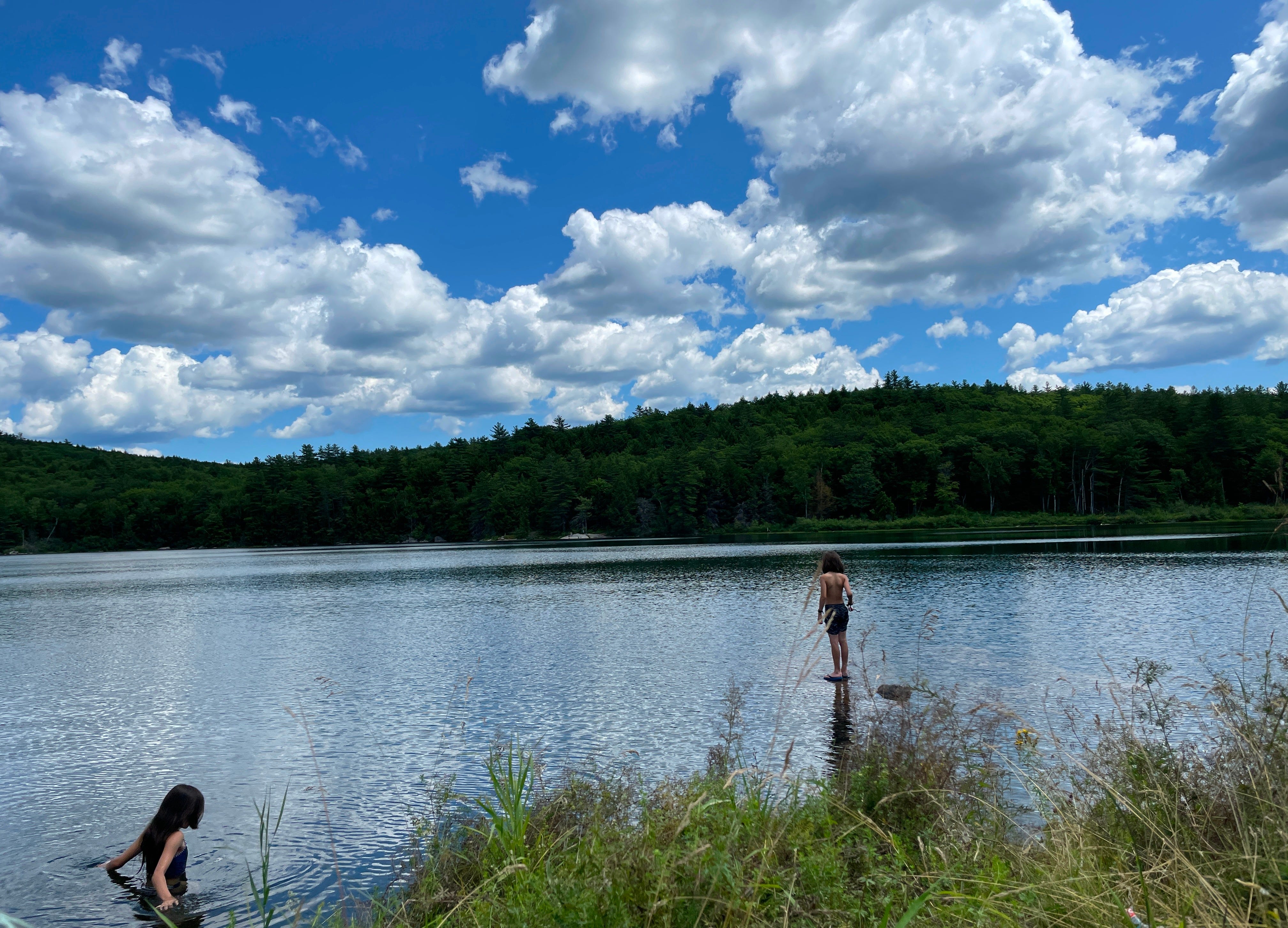
Many traditions assumed that this attention mattered—that the act of noticing participated in sustaining what was noticed. That the world was not fully separate from the consciousness moving within it.
This was not a marginal view. It was the default cosmology of most human cultures for most of human history. The Andean concept of Ayni—reciprocal exchange between human and more-than-human worlds. The Lakota understanding of Mitákuye Oyásʼiŋ—all things related, all things in active relation. The animist traditions of West Africa, of Aboriginal Australia, of the Amazon basin, each arriving by different routes at the same essential recognition: that attention is not passive, and that the living world is not indifferent to being witnessed.
Steiner’s Anthroposophy arrived later and from a different direction, describing the Earth as a living being with its own etheric and astral layers. The Gaia hypothesis arrived later still, in the language of systems biology—finding, through different instruments, what indigenous science had never abandoned.
The idea did not originate in European esotericism. It survived there, among other places, after being largely abandoned elsewhere.
Even in contemporary physics, the boundary between observer and observed is less stable than we once believed. Observer-dependent interpretations of quantum mechanics suggest that consciousness participates in the collapse of potentiality into actuality—that attention is not passive but generative, that where awareness is directed matters ontologically, not only psychologically.
If attention participates in what becomes real—if even a fraction of that is true—then the redirection of billions of human minds away from the living world is not trivial.

It is a withdrawal.
The forests continue. The rivers move. The mycelial networks communicate beneath the soil. But something has shifted. The human gaze, which once moved through these systems as a form of participation—as witness, as relation—has largely turned elsewhere.
Toward representations. Toward simulations. Toward environments that mimic the emotional texture of reality without its substance.
The nervous system does not fully distinguish between the two. But the body does.
There are two ways a system erodes. (see my Erosion Vs. Eruption essay)
One is visible. Sudden. Dateable. A storm, a collapse, a rupture whose before and after are legible. Grief is possible because the loss can be named.
The other is quieter. A slow reallocation of time. A gradual thinning of experience. A shift so incremental it does not announce itself.
You look up one day and the river has changed course, and you cannot say when. You only know that the water no longer runs where it used to, and that what was sustained by it is quietly dying.
The attention economy operates through erosion. Not by force. By preference. By becoming slightly more compelling than everything it replaces.
Until the hours that once held boredom, skill-building, wandering attention, contact with living systems—are occupied elsewhere.
Not taken. Redirected.
What remains outside this system is not abstract.
It is physical.
A plant you return to across a season, attending its full arc from seed to flowering to seed again. A skill that lives in the hands and cannot be downloaded. A body that knows how to be still without input. A place recognized not by coordinates, but by long familiarity—by the particular quality of its light in one season, the way water moves through it, the names of what grows there.
I am an herbalist. I work with plants the way the tradition always intended—not extractively, not as a delivery mechanism for isolated compounds, but relationally. What plants know—or what working with plants teaches, which may be the same thing—is that transformation requires time and the correct conditions, not force. That the healing properties of a plant cannot be separated from its relationship to its ecosystem, its season, its place. That there is intelligence in slowness that speed cannot access.
This is precisely what the Ahrimanic dynamic cannot metabolize. It can process information at speeds that dwarf biological cognition, but it cannot know what the elder flower knows about the June morning that received it. It cannot replicate the etheric signature of a plant grown in specific soil by a person who tends it with care. It can approximate the appearance.
It cannot carry the life.
The herbalist, the farmer, the forager, the person who knows the names of the plants within walking distance of their home—these are not nostalgists. They are, in a precise sense, keepers of the real. Holders of knowledge that exists nowhere in extractable form because it cannot be separated from the conditions that produced it.
These are not lifestyle choices. They are anchors. They operate on timescales the system cannot compress. They require forms of attention that cannot be harvested.
In a world running the Ahrimanic operation at full capacity, this kind of knowledge is not quaint.
It is contraband.

The question is not whether to reject the system entirely.
Total withdrawal produces its own rigidity.
The question is whether it is possible to remain genuinely human within it. Not conceptually. Practically. To maintain forms of attention that are not continuously redirected. To participate without becoming fully legible. To allow parts of life to remain outside optimization.
To refuse, in small and specific ways, to convert every moment into signal.
The Zoroastrian tradition held that Ahriman’s power, though real and dangerous, was not ultimate. That the cosmos was moving—slowly, through conflict and the long work of conscious beings—toward Frashokereti: the renovation, the making-fresh-again. Not a return to an original state but a transformation into something that had never yet existed. A world that had passed through the fire and come out clarified.
This requires, in the Zoroastrian account, the active participation of conscious beings who can see what is happening and choose otherwise. Not escape. Presence. A different quality of presence than the system is designed to produce.
The image remains.
A person looking into a screen. A distant building warming. Energy moving. Attention becoming heat.
The alchemical work has not ended. It has been abandoned in the laboratory. The metals are in the crucible. The heat is on.
The only open question is what, if anything, remains outside its metabolism.
And whether that is where life, in its fuller sense, still resides.

Blair Butterfield is a writer, herbalist, and artist based in Vermont. She writes at the intersection of plant medicine, esoteric ecology, and cultural criticism. She regularly teaches at CraftStudies in White River Junction, Vermont, and makes botanical offerings at plantLustBotanicals and archives her work at BlairEButterfield
What Rudolf Steiner suggested Arihman is attempting to do, is prevent people from regaining their ability to recognize the spiritual world.
Our tendencies play right into his plan. We've reduced the natural world to minerals colliding by chance, and are captivated by networks of technology. Arihman's intention is to stop the evolution of Earth, by preventing humanity from seeing the Divine workings of nature.
Right now, it looks like we're we're doing a pretty darn good job of helping him achieve his goal.